

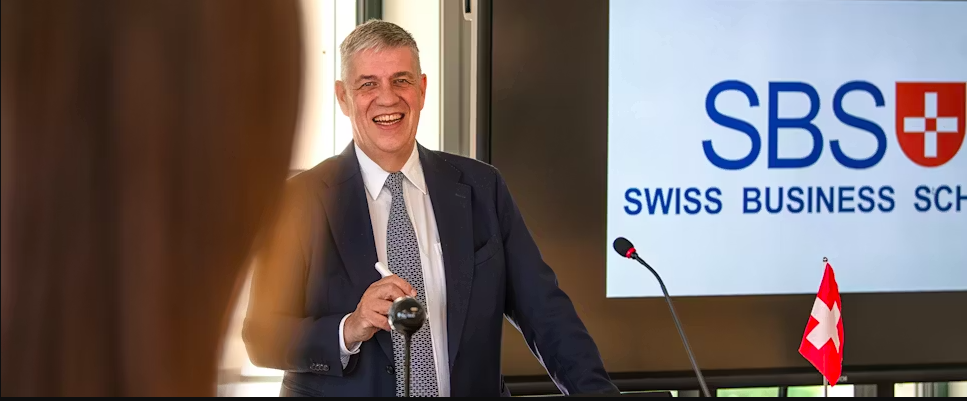
By Prof. Dr. Bert Wolfs, SBS Swiss Business School.
For a long time, investing was an exercise in optimism. Markets rewarded speed, scale, and ambition. Growth covered mistakes. Globalization smoothed risks. If something broke, it was assumed to be temporary.
That confidence is gone.
What we are seeing in the stock market today is not panic, but sobriety. Investors are no longer betting on the best possible future. They are positioning for a world that is tougher, less predictable, and more fragmented than the one they were promised.
When Efficiency Stops Paying
The old investment logic was simple: cheaper, faster, global. Companies that squeezed margins and stretched supply chains were celebrated. Resilience was dismissed as inefficiency.
Then reality intervened.
Factories shut down. Ships stopped moving. Energy became political. Suddenly, “efficient” companies looked fragile. Markets did what they always do in moments like this: they adjusted, quietly and without sentimentality.
The premium shifted from companies that optimized everything to those that controlled something essential.
Security Is Not Fear: It’s Cash Flow
Security sounds emotional, even ideological. In markets, it is neither. It is about who gets paid when conditions deteriorate.
Defense firms do not rely on consumer confidence. Energy infrastructure does not depend on fashion cycles. Semiconductor capacity is not a lifestyle choice: it is a bottleneck. Investors understand this instinctively.
This is why money keeps flowing into sectors tied to national priorities. Not because investors expect heroics, but because they expect continuity.
The security Supercycle is not a boom. It is a long, disciplined reallocation of capital toward what societies cannot afford to lose.
The State Is Back, and Markets Are Fine with It
For years, the state’s presence in markets was treated as a distortion. Today, it is treated as a stabilizer.
Governments are signing long-term contracts, underwriting investment risk, and shaping industrial outcomes. Markets are not resisting this. They are welcoming it. Predictable public demand beats volatile private sentiment every time.
This does not make markets less capitalist. It makes them more realistic.
Volatility Is the Surface, Not the Signal
Yes, prices swing. Yes, headlines are loud. But beneath the noise, the direction is clear.
Capital is moving toward assets that provide energy, defense, data, transport, and production security. These are slow-moving investments. Once money commits to them, it does not chase the next narrative.
The market may look nervous. It is not confused.
The New Investor Instinct
The defining question for investors has changed.
It used to be: How fast can this company grow?
Now it is: What happens to this company when things go wrong?
That single question explains most of what we are seeing in equity markets today. It favors businesses that are boring, regulated, capital-intensive, and deeply embedded in national systems.
In other words, indispensable.
Conclusion
The stock market has not turned pessimistic. It has grown up.
The security Supercycle reflects a world where stability must be built, paid for, and defended. Investors are no longer chasing dreams of frictionless growth. They are buying insurance in the form of companies that make modern economies function under stress.
That may not be romantic. But it is rational. And markets, at their core, are nothing if not rational when illusions finally fade. This is not financial advice, just to be on the safe side. Keep on having SBSM learning fun!